Life between buildings: Urban design insights from Lisbon
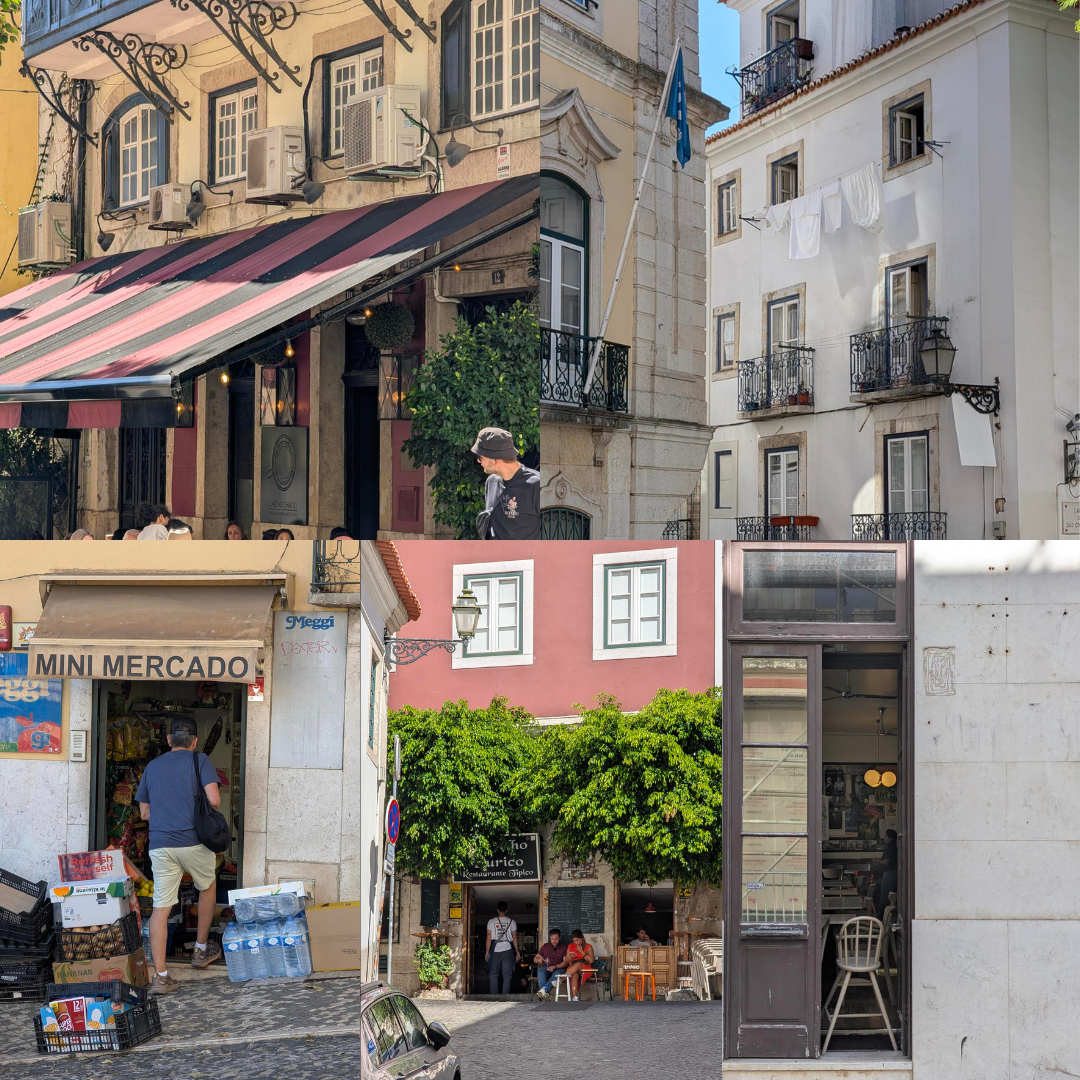
At 24/Three, we understand the importance of good urban design in creating vibrant, thriving neighbourhoods. Thoughtfully designed streets and public spaces promote wellbeing, enhance safety, and make wayfinding intuitive. Streets, plazas, and parks become active, inviting places where people feel comfortable lingering, connecting, and moving through the city.
On a recent trip to Lisbon, I (Marcu) was reminded of the subtle yet powerful ways urban design shapes everyday life. The city’s lively streetscapes highlight the value of outdoor seating and “spill-out” spaces for commercial buildings. Cafés, restaurants, and shops informally extend into the public realm, creating layers of activity that engage passersby and foster social interaction. These spaces encourage a sense of community and make streets feel safer by keeping them active throughout the day.
This principle extends to residential buildings as well. Lightweight structures for overhanging and Juliette balconies, combined with the city’s narrow streets, encourage passive overlooking. This natural surveillance connects residents to the street below, strengthening social cohesion and enhancing safety. Simple design choices like these demonstrate how architecture can actively contribute to the life of a neighbourhood.
Experiencing Lisbon firsthand reinforced a key lesson: successful placemaking is about balance. We often prioritise maximum privacy within homes, sometimes at the expense of the public realm. By thoughtfully adjusting this through slightly narrower streets, larger windows, or lighter balcony structures, the perception of the neighbourhood improves for everyone. Streets and public spaces become safer, livelier and genuinely human-centered.
Author: Marcu Dinca